
Movavi vs. Filmora: Which Video Editor Is Best for You?

The real question in comparing Movavi vs. Filmora is how much of the editing you'd like to handle by hand. Movavi Video Editor fits beginners who want to learn fast and get one-click AI tools in the full version. Filmora fits creators after a larger toolkit with lots of fine settings, who are fine with AI credits and paid add-on assets. Read on if you shoot lifestyle vlogs, unboxings, or travel videos, or if you review games and gadgets on YouTube.

By clicking the download button, you're downloading a trial version of the program.*

Edited by
Ben Jacklin
11,653

How we compared

Six things matter most to a beginner in week one, so we used those when comparing Movavi Video Editor vs. Filmora: how quickly the interface makes sense, which AI video-editing tools actually save time, what ready-made material you get from the start, how each editor bills you, what rendering speed is, and how well it handles a real video from your own channel.

Side-by-side Filmora vs. Movavi comparison

To see Filmora vs. Movavi Video Editor at a glance, check the feature-by-feature table below.

Feature

Movavi Video Editor

Filmora

Positioning

Editor for beginners and everyday creators

AI-powered desktop editor for serious video production

Platforms

Windows 10 and 11 (64-bit), macOS 12.0 or higher

Windows and macOS

Learning curve

Interface designed and tested to be intuitive; most tools work in one click

Medium: simpler than pro editors, but many tools and settings

AI tools

One-click subtitles, noise removal, silence removal, auto-crop, motion tracking

Large AI toolkit running on separate AI credits

Templates

Modular, built from short video segments; several included in the full version

Templates and Instant Mode; paid ones need a subscription

Effects and music

Hundreds of built-in effects, copyright-free music, Movavi Effects add-on

Effects, transitions, and music library; most assets need a separate subscription

Weekly ideas hub

Movavi Ideas, free

Learning Center outside the app; no weekly hub

Free version

60-second export cap, lower output quality, watermark

Yes, exports always watermarked

Best for

Beginner vloggers and gadget or game reviewers

Frequent publishers and semi-professional creators

Movavi or Filmora for beginners: Which is easier to learn?

Movavi Video Editor keeps things quick and plain. Point at a clip, effect, or transition and you get an instant preview before anything touches your project. Like what you see? Drag it onto the timeline. That leaves your attention for the video itself. If you're short on ideas, Movavi Ideas posts a free step-by-step tutorial each week, and each one takes under a minute to follow.

Filmora has a medium learning curve. The interface is lighter than a professional editor's and relies on templates and AI automation. Still, the sheer count of single-task AI features and fine-tuning settings can slow a newcomer. Filmora's teaching material is the Filmora Learning Center, a blog of editing tutorials.

Movavi Video Editor is the better fit for first-time editors who want a finished video in one sitting, while Filmora suits creators who already work comfortably with keyframes.

AI editing tools

The everyday basics are covered on both sides: automatic subtitles with translation and ready-made styles, automatic pause removal, subject-tracked reframing for vertical video, and background removal with no green screen. What differs is how each editor bundles them.

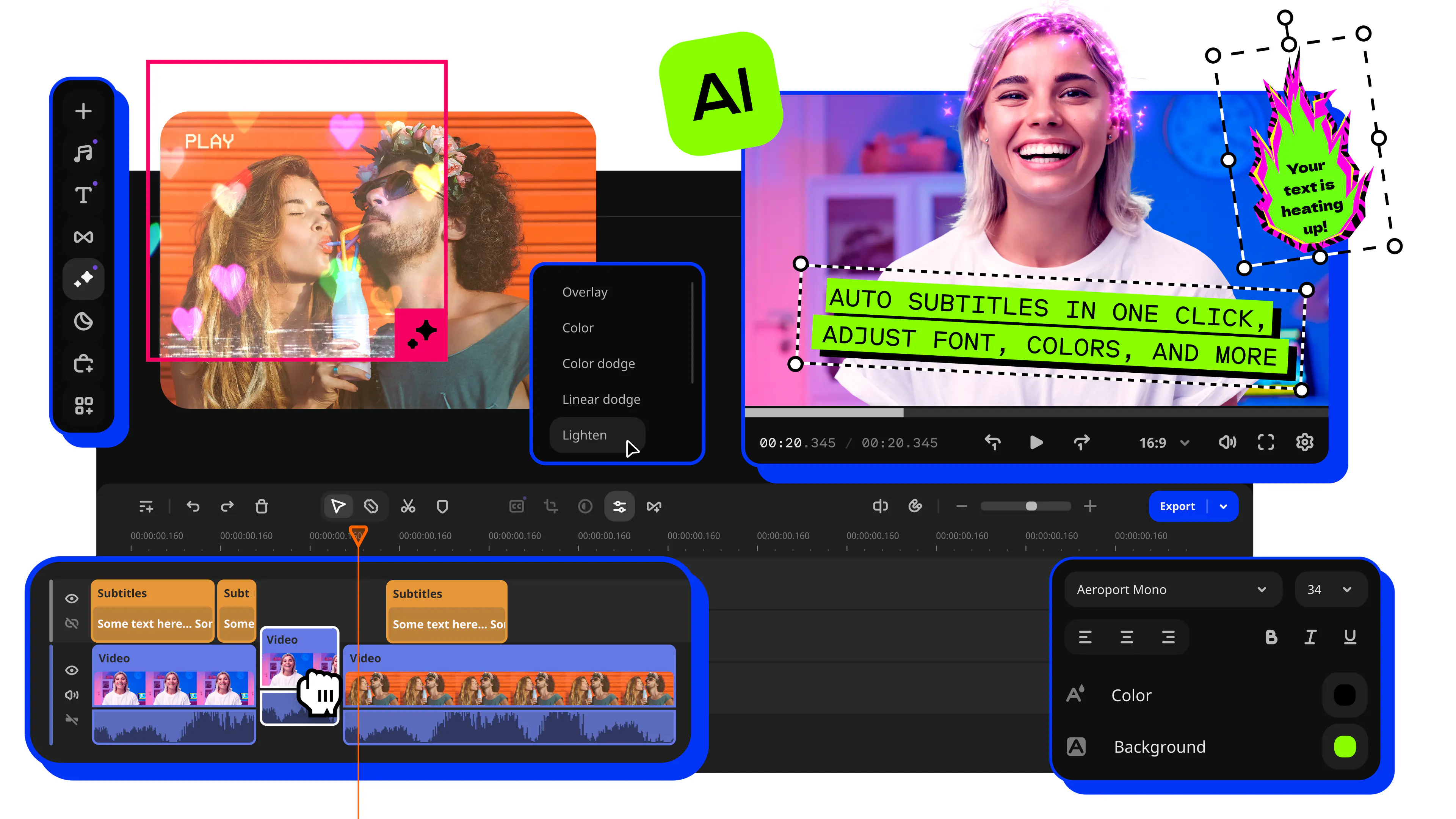
Movavi Video Editor handles the dull jobs in a single click: subtitles in 100+ languages, video and audio noise removal, silence removal, auto-crop with subject tracking, and motion tracking. All of it ships with the full version of Movavi Video Editor. By Movavi's internal tests, auto-silence removal runs nearly 5 times faster than trimming pauses manually on the timeline. One-click video denoise removes grain and low-light artifacts and keeps faces and edges sharp.

Auto subtitles

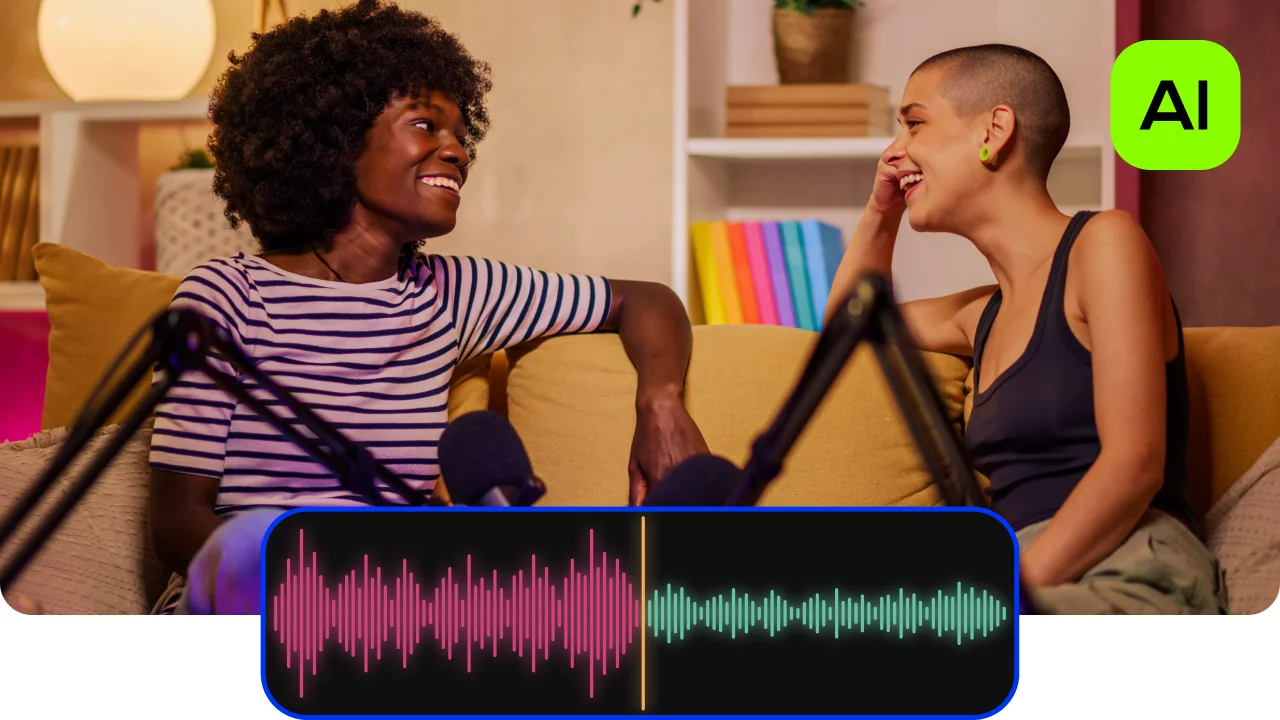
AI audio noise removal

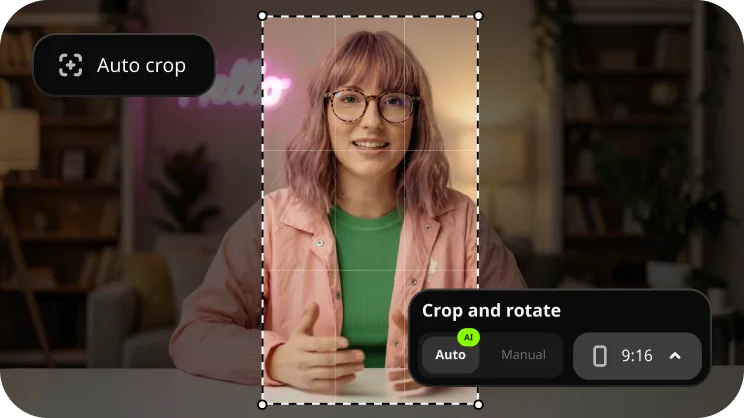
Auto-tracked cropping

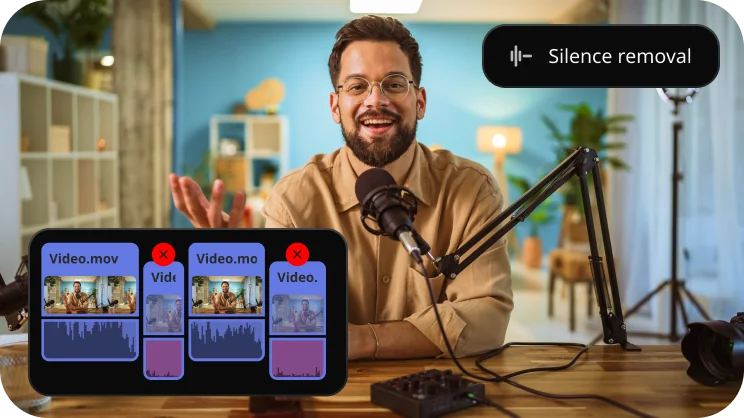
Auto-silence removal

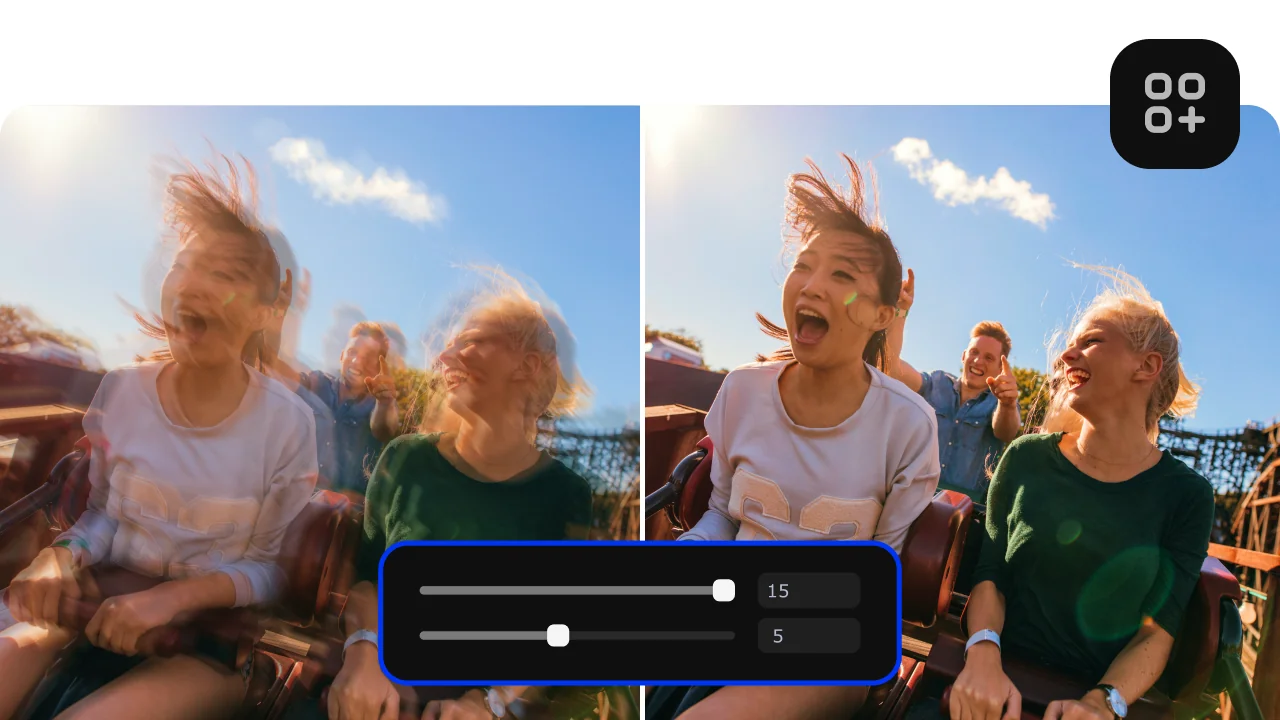
AI video denoise

AI motion tracking

Filmora's AI toolkit is larger and tilts toward creating new material: prompt-based video and image generation, AI music matching, AI lighting correction. Filmora treats video noise only as one piece of its general quality enhancement, where the program picks the parameters to adjust. It draws on separate, limited AI credits, and the lower paid tier excludes AI.

Choose Movavi if you want everyday cleanup covered by the full license, and choose Filmora if you want generative AI and don’t mind tracking credits.

Effects, music, and templates

Out of the box, Movavi Video Editor gives you hundreds of drag-and-drop effects (titles, transitions, filters, overlays) plus copyright-free music. The Movavi Effects add-on subscription brings 10,000+ effects and 1,500+ music tracks, sorted into themes like blogs, social media, business, family, holidays, and education. You can preview any effect or template on your own footage before buying, so the look is settled before the payment.

Filmora keeps a library of its own with effects, transitions, and templates, and adds Instant Mode for different occasions and formats. Most of its assets and templates need a separate subscription, and the Effects Store gets promoted inside the interface. Reviewers like how large its trending library is.

Movavi Video Editor works better if you like to try add-ons on your own clips before you pay, and Filmora works better if you want a big library of trending templates and effects.

Pricing

When you compare Filmora vs. Movavi pricing, each editor turns out to have a free entry point and paid layers above it. Movavi Video Editor lets you try every tool in the app, but paid features restrict export. The full version drops every limit and is available from $19.95/month. Movavi Effects and Movavi Templates are separate subscriptions. Since you begin free and add only what you need, the license grows along with your budget.

Filmora's free version watermarks every export. Paid options take the watermark off, and AI features and video generation then pull from separate, limited credits on top of the base price. Filmora also lists a one-time license purchase for a single platform and version. If a lifetime license matters most to you, look at that option first. Pricing for Filmora subscriptions start at $5/month.

Movavi Video Editor is the better choice if you want to pay only for the pieces you use. If you prefer a one-time purchase, look at Filmora’s option first.

Movavi Video Editor

Filmora

Starting price

$19.95/month

$5/month

Free version

All tools available to test; 60-second export cap, lower quality, watermark

Every export watermarked; limited number of exports

Top option

Full version: no watermark or export limits

Advanced: adds AI tools

How AI is paid for

Included in the full version, no credit system

Separate, limited credits on top of the subscription

Extra effects and music

Movavi Effects subscription: 10,000+ effects, 1,500+ tracks

Separate Effects Store subscription

Movavi Video Editor: Key features, pros, and cons
Best for: beginner lifestyle vloggers, unboxers, and game or gadget reviewers who want a finished video fast.

Price and platforms: desktop app for Windows 10 and 11 (64-bit) and macOS 12.0 or higher. Free version available, full version from $19.95/month.

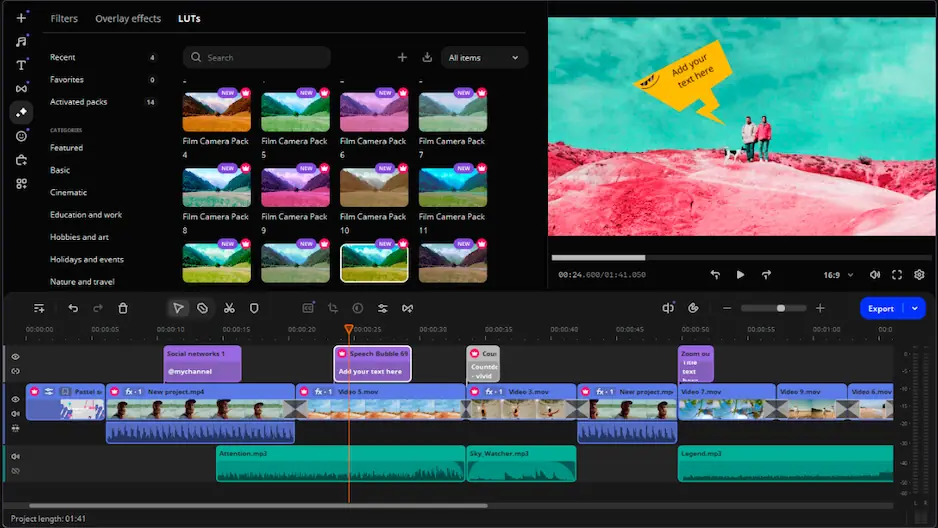
Movavi Video Editor is an intuitive video editor with customizable video templates, one-click AI tools, and hundreds of drag-and-drop effects. Most tools run in one click, and on a first project a template comes with transitions, music, and text already placed, so your first cut has pacing and titles before you add a single effect.

Key features

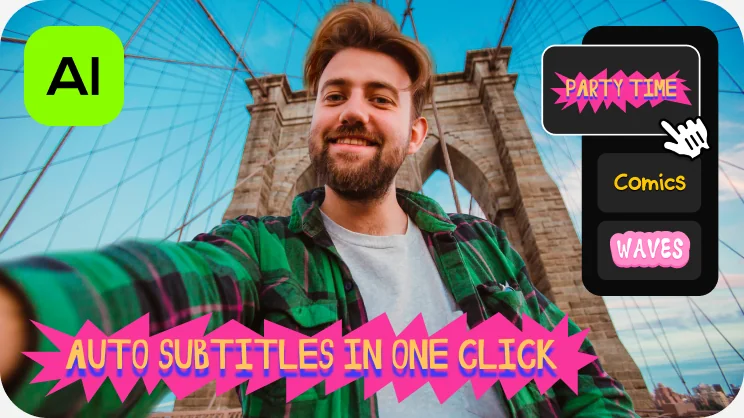
  • AI subtitles recognizes 100+ languages at 99% transcription accuracy, offers 60+ subtitle designs, and highlights words in sync with the audio.
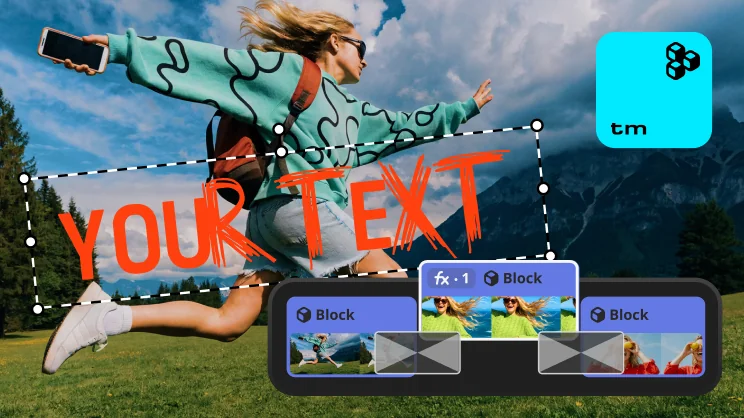
  • Movavi Video Templates is a multi-style library of customizable, pro-looking, modular templates for any kind of video. It is built from Blocks, short pre-edited segments of the video, where you drop in your own clips, photos, and text.
  • Auto-silence removal: pause length and volume thresholds are adjustable, for automated cleanup or manual control.
  • Auto-tracked cropping turns horizontal footage into vertical and keeps the speaker or product centered.
Pros:
  • Fully customizable templates

  • Copyright-free music and sounds are built in

  • 14 interface languages, 70M+ users, and availability in 190+ countries

Cons:
  • Lacks advanced, detailed controls for a professional workflow

  • The UI can't be customized flexibly

Filmora: Key features, pros, and cons

Best for: frequent YouTubers and semi-professional creators who publish on a steady schedule and want fine control.

Price and platforms: Windows and macOS. Subscriptions start at $5.

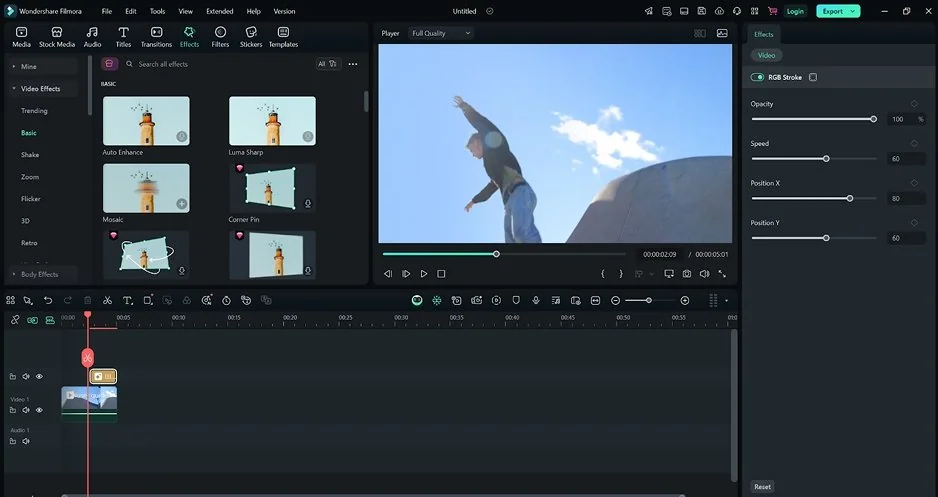
Filmora is an AI-powered desktop video editor aimed at serious video production. It has a multitrack timeline, keyframe animation, and motion tracking, along with many small tools for niche tasks.

Key features

  • Templates and Instant Mode: ready-made starting points for different occasions and formats.
  • AI auto reframe (Smart Short Clips): subject-tracked reframing, plus vertical highlights cut from long videos.
  • AI Portrait Cutout: removes the background with no green screen.
  • AI music matching: picks tracks from the built-in library to suit the mood of the video.
Pros:
  • Handles complex, multi-layer projects with motion graphics

  • Handy AI tools

  • Reviewers rate it simpler than professional software

Cons:
  • AI features use separate, limited credits, and the lower paid tier excludes AI

  • Free version exports always carry a watermark

  • The count of AI features and fine-tuning settings can slow a beginner down

User reviews

Movavi Video Editor

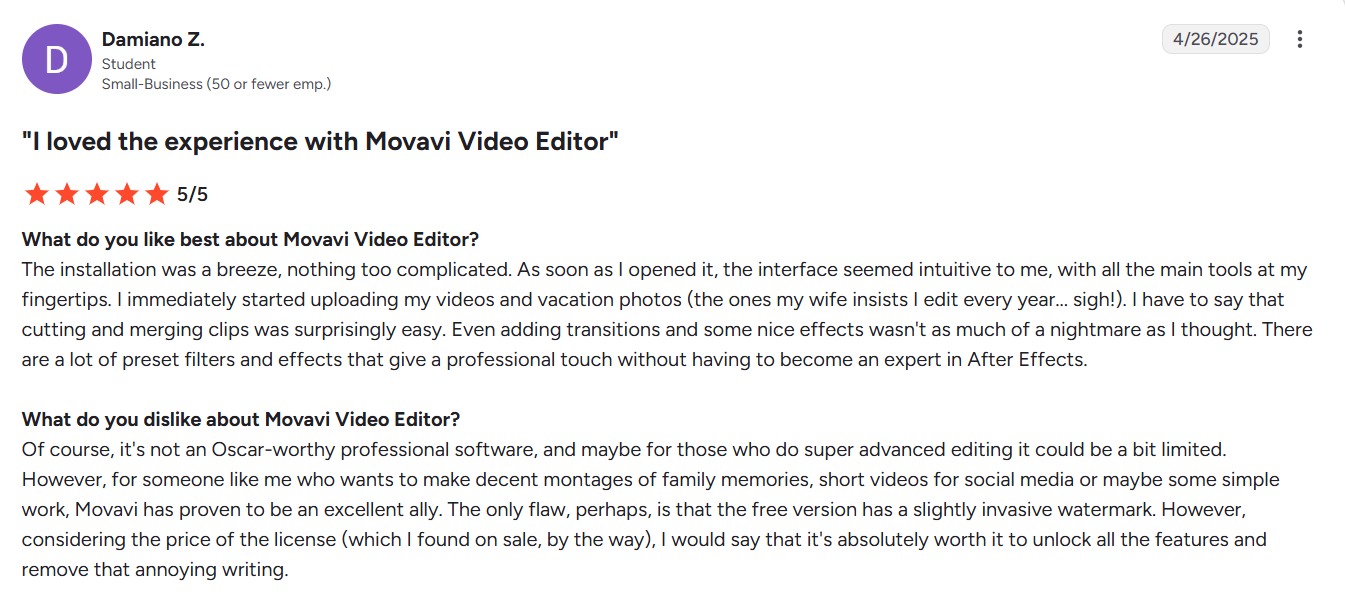
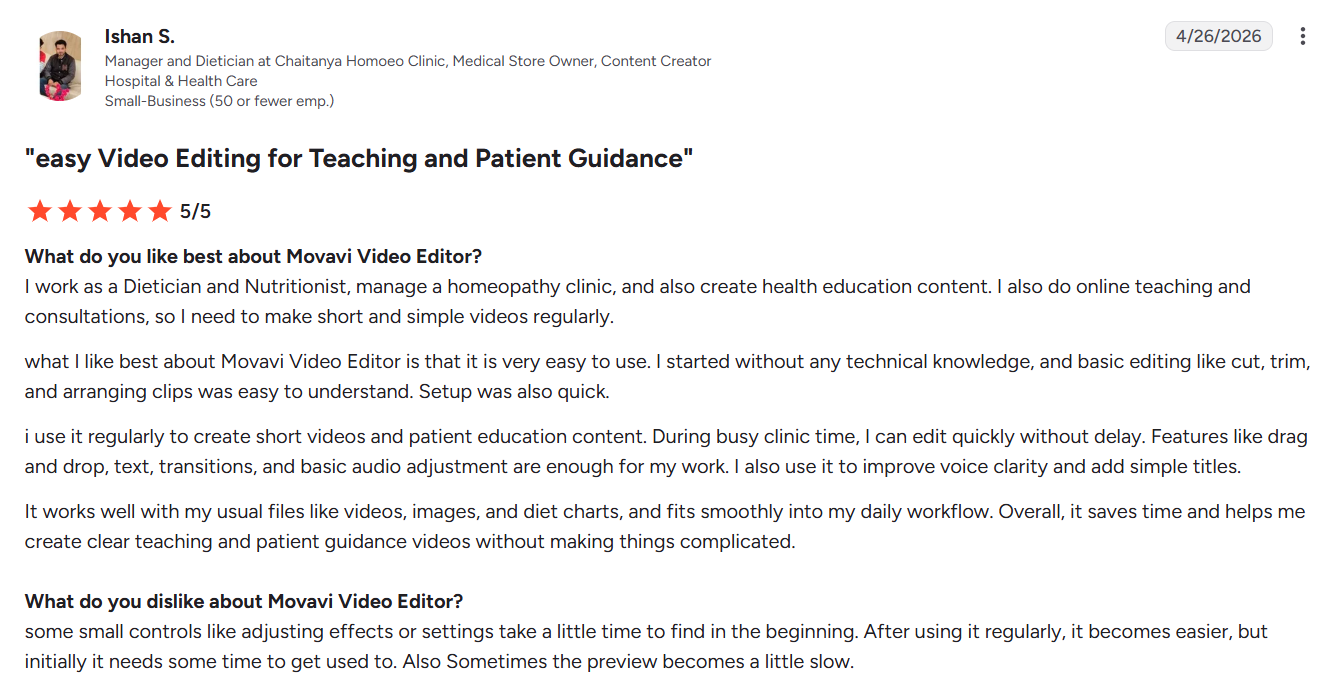
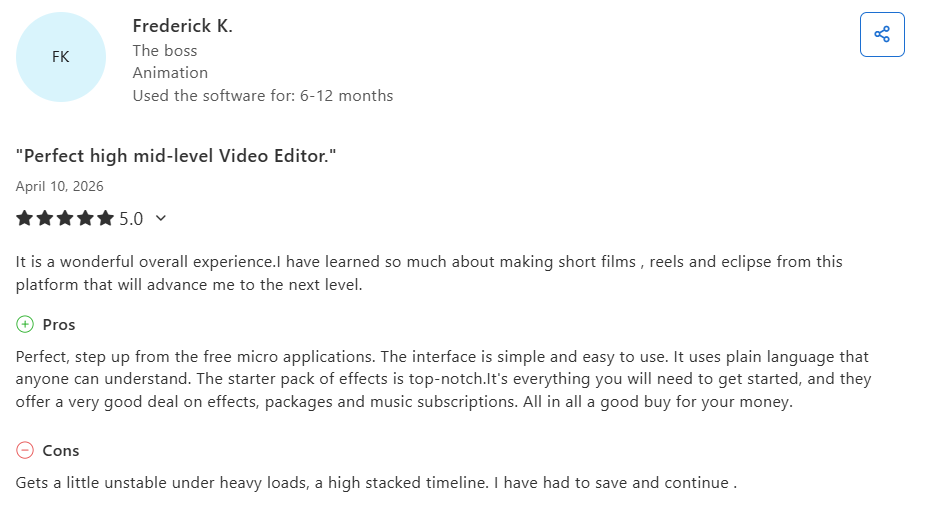
Reviewers on G2 and Capterra platforms like that they could start editing without a tutorial. They also mention fair value for the price, smooth running on low-end PCs, and a base version that already includes plenty of effects, titles, and licensed music.

The complaints: UI isn’t customizable, some effects and music that need an add-on subscription on top of the main license.

Filmora

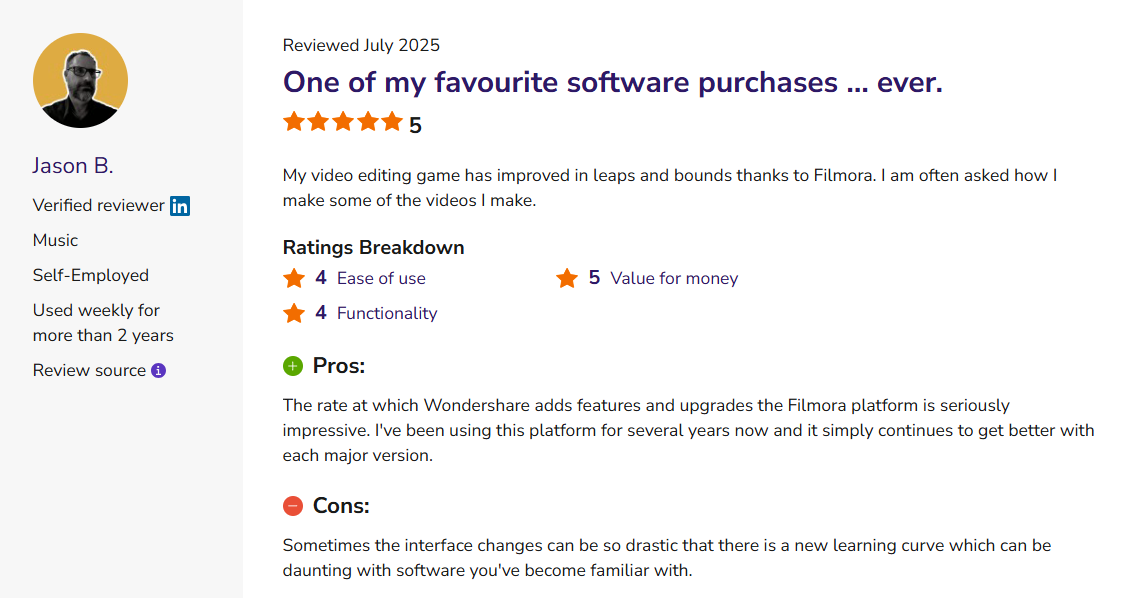
Reviewers on Capterra and Software Advice point to a big library of trending templates and effects, and they describe the software as simpler than professional editors.

The complaints: paywalls that keep growing, AI credits that run out and need a higher-tier plan, and an impression among some users that parts of the software feel raw or unfinished.

Which tool fits your videos?

A daily-routine or travel vlog

Say you're doing YouTube video editing: long horizontal clips, and you'd like a vertical cut as well. In Movavi, silence removal clears out the dead air, auto-tracked cropping keeps you centered in the vertical frame, and AI subtitles highlight each word as it's spoken, so a talking-head stretch is easy to follow. Filmora's AI auto reframe also tracks the subject and can pull vertical highlights from long videos, using AI credits.

A skincare tip video or an unboxing shot in low light

Movavi's AI video denoise cleans up grain in dim footage, and AI background removal works on any video with a person, replacing the backdrop with anything from a solid color to a custom image, no green screen needed. Filmora handles the backdrop through AI Portrait Cutout and adds AI lighting correction.

A game review or gadget review

In Movavi Video Editor, speed control goes up to 100x for time-lapses and quick recaps, motion tracking pins a label to a moving gadget, and AI audio noise removal clears traffic, wind, and steady hums. When your reviews grow into multi-layer projects with motion graphics, Filmora's multitrack timeline and keyframe animation leave you more room.

How to choose between Movavi and Filmora

Here’s how to choose between Movavi vs. Filmora in 2026. Pick Movavi Video Editor if you're a beginner or an everyday creator who wants subtitles, silence removal, noise removal, and vertical reframing in a click, with effects and Block-based templates on hand and a license you assemble piece by piece.

Pick Filmora if you publish on a steady schedule, edit across multiple tracks with keyframes, and are comfortable managing AI credits and add-on assets.

Mostly cutting, captioning, and speeding up footage? That's Movavi territory, vlog or game highlight reel alike. Building layered motion graphics? Filmora gives you more room.

Movavi vs. Filmora system requirements rarely decide it: both editors run on Windows and macOS, and Filmora works on a mid-range laptop, so choose on workflow.

Still undecided? Each has a free version, so try both on one of your own clips.

Your next step is a small one: download the free version of Movavi Video Editor, import one of your own clips, and open Movavi Ideas for a first thing to try.

Movavi Video Editor
Create awesome videos easily

*The free version of Movavi Video Editor may have the following restrictions depending on the build: watermark on exported clips, 60-second video or 1/2 audio length limit, and/or some advanced features unavailable when exporting videos.

Frequently asked questions

Which is better: Movavi or Filmora?

That depends on the job. Movavi Video Editor suits beginners who want one-click AI tools and a short learning curve. Filmora suits creators who want multitrack timelines and keyframes. One more detail: Movavi ships 25+ updates a year, and its 2026 updates added auto-tracked cropping and one-click video denoise.

Is Movavi better than Filmora for YouTube video editing?

Both cope with long horizontal videos and vertical cuts. Movavi Video Editor also offers direct upload to YouTube, Vimeo, and Google Drive, with platform-specific title, description, and privacy settings.

Do both have a free version?

Yes. The free version of Movavi Video Editor lets you test the tools on a real project, and move to the full version when you're ready. Filmora's free version watermarks every export.

Have questions?
If you can’t find the answer to your question, please feel free to contact our Support Team.
Join us for discounts, editing tips, and content ideas

1.5M+ users already subscribed to our newsletter

By signing up, I agree to receive marketing emails from Movavi and agree to Movavi's Privacy Policy.